

The Real History Behind Outlander
A Slow Read companion to the world Claire fell into.

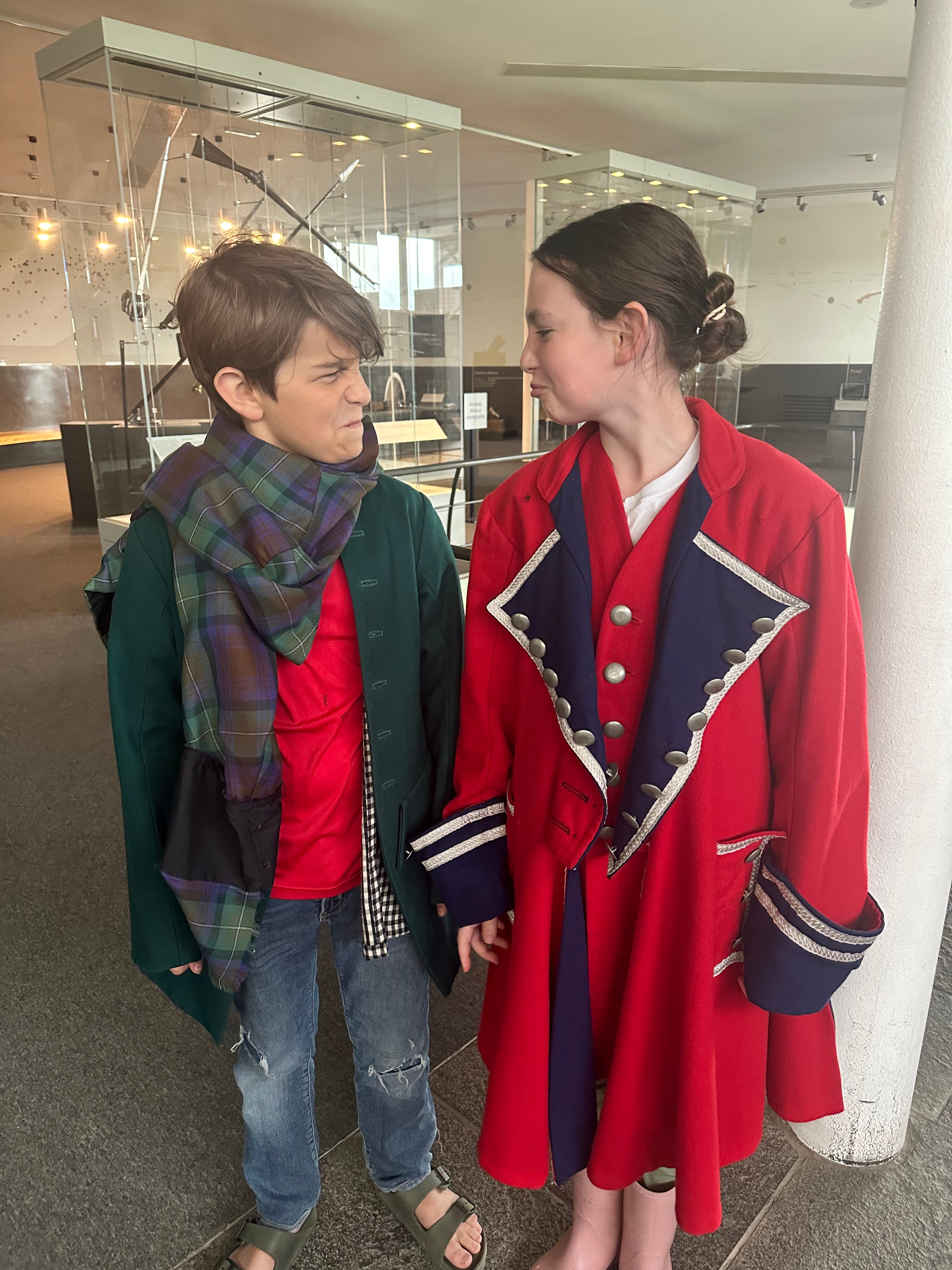
Diana Gabaldon dropped her time-traveling heroine into one of the most consequential, most heartbreaking moments in Scottish history. I encountered it on my trip to Scotland several years ago and wanted to refresh my memory before we begin in August.
When the book starts, Claire Randall is a combat nurse, fresh out of the Second World War, on a second honeymoon in Inverness in 1945. She touches the stones at Craigh na Dun and lands in 1743. (This is not a spoiler. This is the basic premise!) So Gabaldon is running two clocks at once, and both of them matter. Claire comes from a world that has just watched empire and ideology tear Europe apart. She arrives in a Scotland that is about to be torn apart in almost exactly the same way — by a doomed cause, by men who believe in it utterly, and by an army that will make sure it never rises again.
The whole engine of the story is the Jacobite cause. Here’s the short version. In 1688, the Catholic king James II of England (James VII of Scotland) was pushed off the throne in favor of Protestant monarchs. His supporters — Jacobites, from Jacobus, the Latin for James — spent the next sixty years trying to put his line back. It was about religion, yes, but also about Scotland, about the old order, about who got to rule and from where.
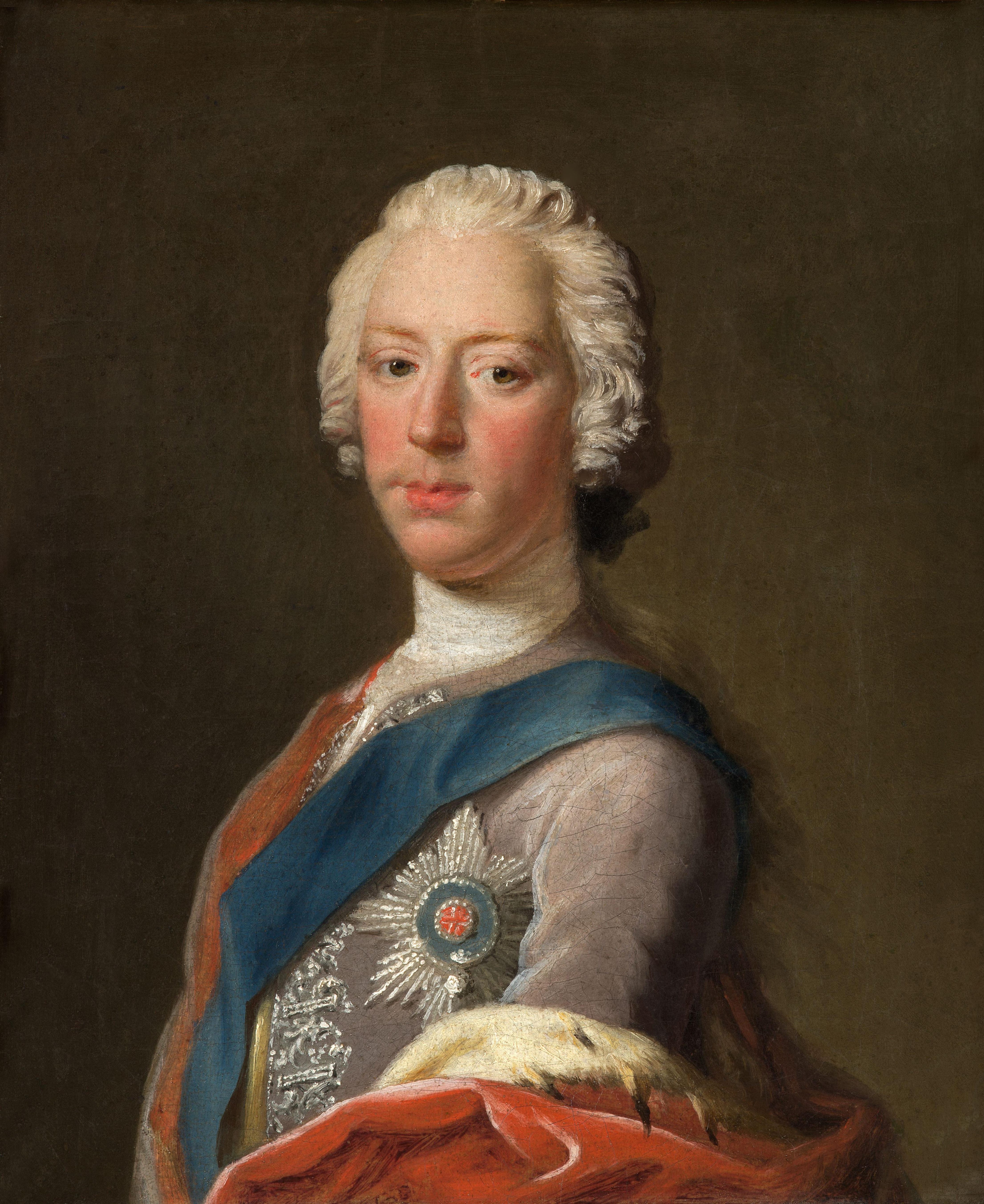
By the time Outlander opens, the cause is hanging on one young man: Charles Edward Stuart, “Bonnie Prince Charlie,” (whose name I heard one thousand times on our trip!) grandson of the deposed king. In 1745 he sailed to Scotland with almost nothing — no French army behind him, just charisma and a claim — and somehow talked the Highland clans into rising one last time. They called it the ‘45.
Wonder how that went? NOT WELL!
The Jacobites took Edinburgh, won a stunning early victory at Prestonpans, and marched south into England as far as Derby — terrifyingly close to London. And then it fell apart. They turned back. And on April 16, 1746, at Culloden Moor, near Inverness, the exhausted, outnumbered Jacobite army was destroyed in under an hour. It was the last pitched battle fought on British soil, and it was a slaughter.
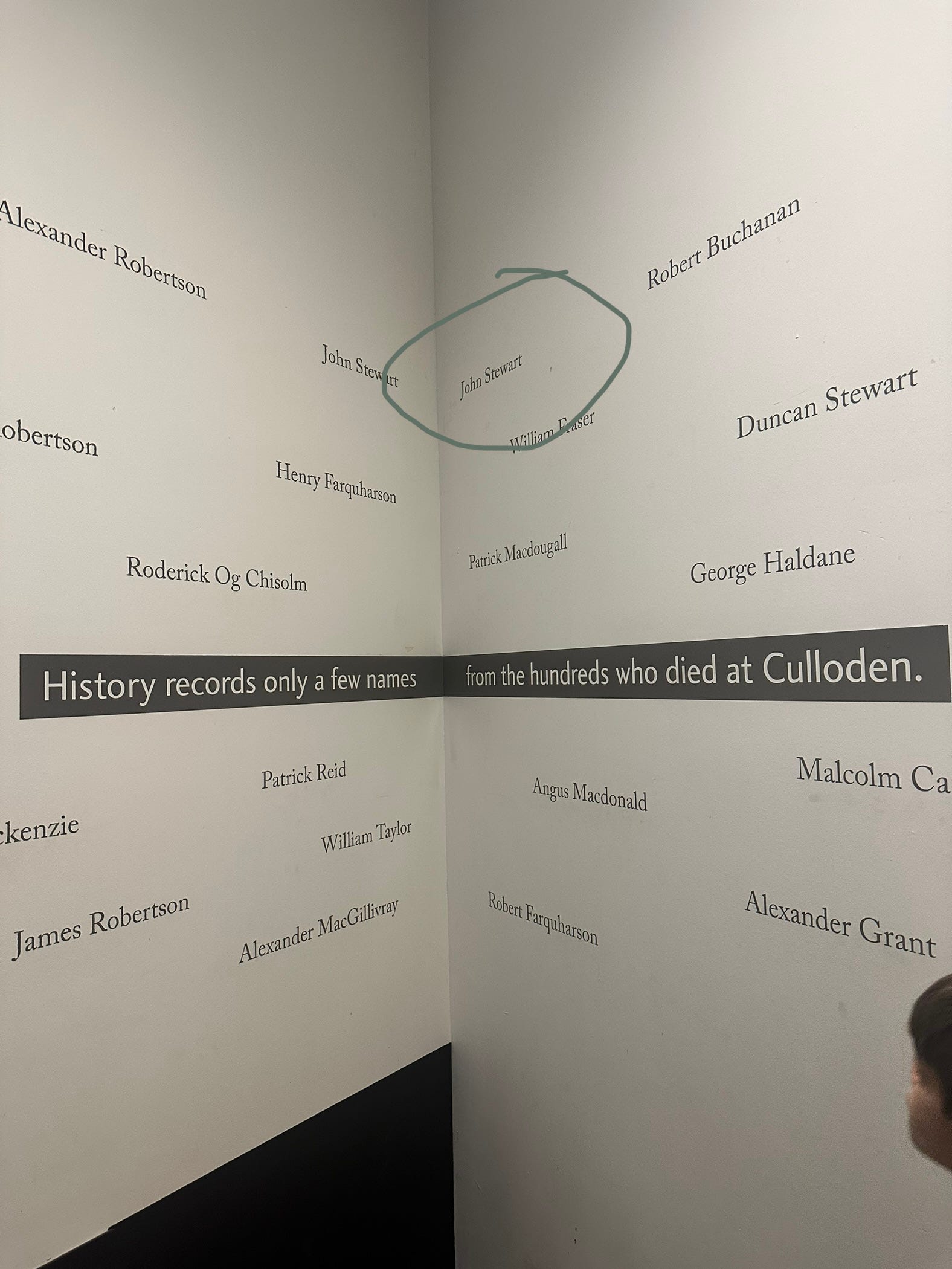
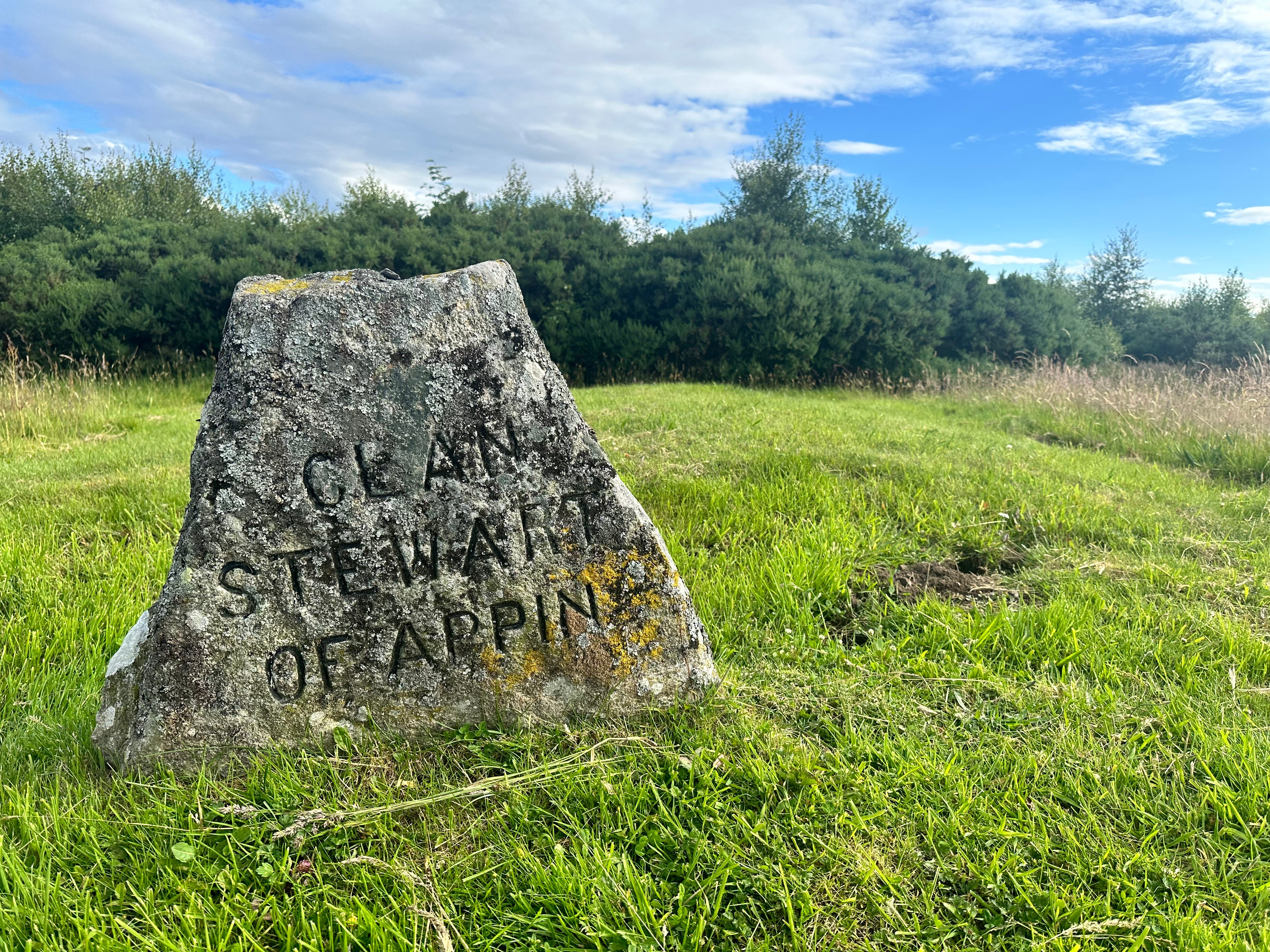
We visited the site of the Battle of Culloden and it was supremely weird to see my dad’s name “John Stewart” several times on the memorial wall.
The British government did not just win. They set out to make sure the Highlands could never threaten the crown again. The Duke of Cumberland — they called him “the Butcher” — hunted down survivors. And then came the laws. The Act of Proscription banned Highland dress; for a generation, wearing a kilt or a tartan could get you imprisoned or shipped overseas. The clan system — the whole web of kinship and loyalty and land that organized Highland life — was deliberately dismantled. Chiefs became landlords. The bonds that held people to a place and to each other were cut on purpose.
And in the decades that followed came the Highland Clearances, when those same landlords pushed tenant families off the land to make room for more profitable sheep. People who had lived somewhere for centuries were loaded onto ships for Canada, the Carolinas, Australia. A way of life was ended (It reminds me of Land, which I recently finished.) and, if you’ve been to Scotland, you know you can still feel the impact.
This is why a story that starts as a romance carries so much grief in its bones. Gabaldon isn’t writing about a battle. She’s writing about the last days of a world, narrated by a woman who already knows it’s ending.
If you're excited to take this time-bending journey with Claire (and me and Laura!), a reminder that Slow Read: Outlander will only be available to paid Substack members — so upgrade today and don't miss a single chapter.
— Sarah
I’ve read this whole series & love it, it touches so much history throughout the series. Patiently waiting for book 10.
When does the read along begin? Can't wait!